










Table of Contents
- Two Ways To Move Interstate, Two Very Different Prices
- What is Backloading?
- What is a Dedicated Moving Truck?
- The Real Cost Difference: 2026 Figures
- Dedicated Truck Rates
- How Much Space Do You Actually Need?
- When Backloading Is Genuinely Cheaper
- When a Dedicated Truck Actually Works Out Cheaper
- 1. Big Loads Stop Saving You Money
- 2. Fixed Dates Cost Money When You Miss Them
- 3. Storage Fees Eat The Discount
- 4. Insurance Gaps
- 5. Fragile and Awkward Items
- Hidden Costs To Ask About Before You Book
- Quick Decision Guide
- Final Takeaway
- Frequently Asked Questions
- Is backloading always cheaper than a dedicated truck?
- How much does backloading cost in Australia?
- How long does a backload take to arrive?
- Is my furniture safe on a shared truck?
- Can I backload just a few items?
- Is backloading available on every route?
For most interstate moves, backloading is cheaper. Australian removalists charge roughly $95 to $243 per cubic metre for backloading, compared with about $150 to $290 per cubic metre for a dedicated truck. Most households save 30% to 50%. But backloading stops being the cheaper option once your load gets close to a full truck, or when you need your furniture delivered on a fixed date.
Two Ways To Move Interstate, Two Very Different Prices
Around 381,000 interstate moves were expected across Australia in 2025–26, with that figure forecast to reach 416,000 in 2026–27. Nearly all of those families face the same choice: pay for a whole truck, or share one.
Most people never get a straight answer on which one saves money. So here it is, with the actual numbers.
What is Backloading?
Backloading means you buy space on a truck that is already making your journey. Removal trucks rarely travel full in both directions. A truck runs a family from Melbourne to Brisbane, drops the load, and then faces a 1,700 km drive home with an empty trailer. That return leg costs the company fuel, tolls and driver hours whether it carries anything or not. Selling that space at a discount beats earning nothing.
You pay only for the cubic metres your goods take up. If your belongings fill 20% of the truck, you pay roughly 20% of the cost of getting that truck to the destination. The trade-off is timing. You move when the truck moves, not when you feel like it.
What is a Dedicated Moving Truck?
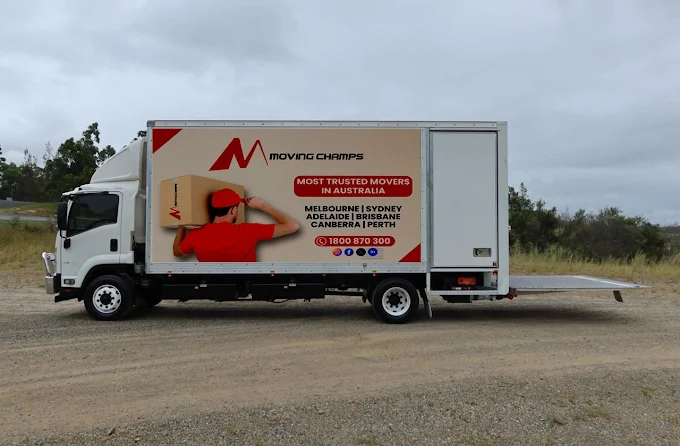
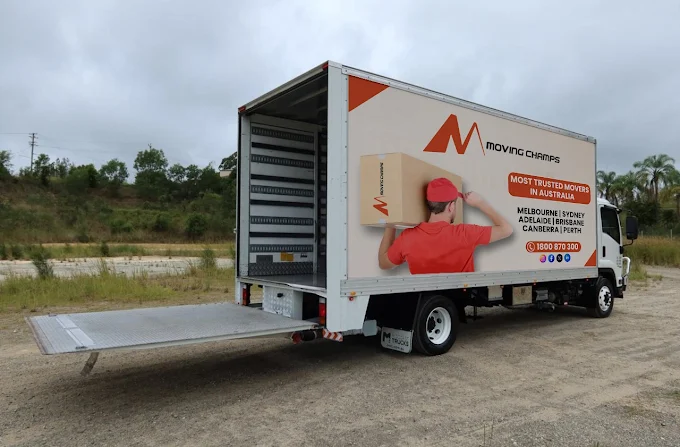
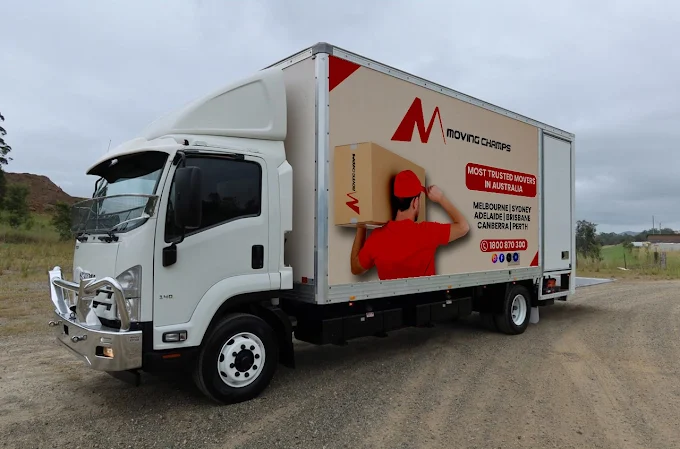
A dedicated truck is booked for you and nobody else. It arrives on the date you agreed, loads only your things, drives straight to your new address, and unloads.
No sharing. No waiting for the load to be matched. No other customer’s boxes sitting next to your dining table.
You pay for that certainty, and you also pay for the space you didn’t use.
The Real Cost Difference: 2026 Figures
Interstate removals in Australia are priced by volume (cubic metres) and distance, not by the hour. Here’s what the market is charging right now.
Average Backloading Rates By Route
| Route | Average rate per m³ | Typical job |
|---|---|---|
| Sydney → Melbourne | ~$151 | ~$1,592 for 10.5 m³ |
| Melbourne → Perth | ~$224 | ~$2,450 for 11 m³ |
| Sydney → Perth | $194–$243 | ~$2,343 for 9.6 m³ |
| Out of Perth (all destinations) | ~$193 | ~$3,393 for 17.6 m³ |
Sydney to Melbourne backloads average around $151.51 per cubic metre, with most jobs landing near $1,592 for about 10.5 cubic metres. Melbourne to Perth runs closer to $224 per cubic metre, with typical jobs near $2,450 for around 11 cubic metres. Sydney to Perth sits between $194 and $243 per cubic metre. Out of Perth, the average is $192.80 per cubic metre, with an average job of $3,393 across 17.6 cubic metres.
Dedicated Truck Rates
The national average for a dedicated truck service sits at roughly $170 to $180 per cubic metre. Broader 2026 rate guidance puts interstate work anywhere between $150 and $290 per cubic metre depending on distance.
Same house, both options
| Home size | Route | Dedicated truck | Backloading |
|---|---|---|---|
| 3-bedroom | Sydney → Melbourne | $2,500–$5,000 | $1,400–$3,000 |
| 3-bedroom | Typical interstate | $3,625–$5,075 | $2,375–$3,325 |
| 2-bedroom unit | Sydney → Perth | $2,500–$4,000 | from ~$1,900 |
A three-bedroom home going Sydney to Melbourne costs $2,500 to $5,000 on a dedicated truck, or $1,400 to $3,000 by backload. Across standard routes, a three-bedroom house runs $3,625 to $5,075 dedicated versus $2,375 to $3,325 backloading.
There’s one more benchmark worth knowing, because it lets you sanity-check any quote you’re given: on east coast routes, backloads generally work out to $4–$8 per cubic metre per 100 km, while dedicated trucks run $8–$14 per m³ per 100 km. If a quote sits well outside that, ask why.
How Much Space Do You Actually Need?
You can’t compare quotes without knowing your volume. As a rough guide, allow 10 to 12 cubic metres per bedroom, though it depends on how much furniture you own.
- 1 bedroom: 15–20 m³
- 2 bedrooms: 25–35 m³
- 3 bedrooms: 40–55 m³
A one-bedroom load usually fills 15 to 20 cubic metres, a two-bedroom move averages 25 to 35, and three-bedroom homes typically run 40 to 55 cubic metres.
Notice something. The average backload job on the Sydney–Melbourne run is about 10.5 m³. That’s a studio or a light one-bedroom. Backloading is built around partial loads.
When Backloading Is Genuinely Cheaper
Backloading Removalists can be a cheaper option when most of these apply:
- Your load is under about 25 cubic metres
- You can accept a pickup window of a few days rather than a set date
- You’re moving on a busy corridor — Sydney, Melbourne, Brisbane and Adelaide have trucks running constantly
- You’re between leases, staying with family, or your new place isn’t ready anyway
- You’re a student, a couple, a share-house mover, or downsizing
If you’re moving a one-bedroom unit from Sydney to Melbourne and you’re relaxed about dates, backloading will almost always beat a dedicated truck. It isn’t close.
When a Dedicated Truck Actually Works Out Cheaper
This is the part most moving websites skip, so pay attention here.
1. Big Loads Stop Saving You Money
Backloading is priced per cubic metre. That’s brilliant when you’re using a small slice of the truck. But a 45 m³ load doesn’t leave any spare space to share, so you’re effectively hiring the whole truck while still paying per-metre rates. Somewhere around 25 to 30 cubic metres, the two prices converge. Past that, a dedicated quote often wins outright. Always get both quotes if you’re moving a full family home.
2. Fixed Dates Cost Money When You Miss Them
Backloads usually come with a collection window of around 48 hours rather than a set day. Transit times vary too: Sydney to Brisbane takes 2–3 days, Melbourne to Brisbane 3–4 days, and Perth to Sydney 5–7 days. Melbourne to Perth backloads are usually done inside 5 to 10 business days, but deliveries to regional WA or mining towns can stretch to 28 days.
If you have a settlement date, a lease start, a job start or kids beginning school, work out what a week without your bed actually costs. Two weeks of short-stay accommodation for a family can wipe out $1,500 of savings and then some.
3. Storage Fees Eat The Discount
If your truck can’t collect on the day you vacate, your goods need somewhere to sit. Storage plus double handling turns a cheap quote into an expensive one.
4. Insurance Gaps
Basic transit cover on many backloads only protects against fire, collision and overturning. It doesn’t cover breakage or handling damage. Comprehensive cover is a separate purchase. Factor that in before you compare headline prices.
5. Fragile and Awkward Items
Pianos, marble tops, glass cabinets, and antiques get handled more often on a shared load because other people’s goods come off and on around yours. Fewer touches means less risk.
Hidden Costs To Ask About Before You Book
Two quotes are only comparable if they cover the same work. Ask every company:
- Is this price fixed, or does it change if my volume is bigger on the day?
- What insurance is included, and what does it exclude?
- What’s the collection window and the delivery window?
- Are stairs, long carries or lift bookings charged extra?
- Is there a fee if the truck can’t park near the door?
- Who do I ring while my goods are in transit, and how often will I hear from them?
- Is the company AFRA accredited?
A transport-only backload price and a full-service quote are not the same product. Compare like for like.
Cheap quotes that look too good usually are. If you want to know what to watch for, read our guide on how to spot a dodgy removalist quote.
Quick Decision Guide
- Choose backloading if: your load is small to medium, your dates are flexible, you’re on a major corridor, and saving money matters more than knowing the exact delivery day.
- Choose a dedicated truck if: you’re moving a full house, you have a settlement or lease date locked in, you’re going somewhere remote, or you’re moving items you can’t afford to have damaged.
- Do both: ask for a backload quote and a dedicated quote on the same inventory. Any decent removalist will give you both. The gap between them is your real decision, not a percentage you read online.
Final Takeaway
On the quote alone, backloading usually wins. Share the truck, pay for the space you use, save a few hundred or a few thousand dollars. For a light load with no fixed dates, that’s a sensible way to move.
What the quote doesn’t show you is the rest of the bill.
A delivery window instead of a delivery date means somewhere to sleep while you wait. Goods you can’t collect the day you vacate need storage, and storage means paying twice to handle the same furniture. Basic transit cover on a shared load often stops at fire, collision and overturning, so anything chipped, scratched or broken in handling comes out of your pocket. Add those up, and the gap between the two options narrows fast. On a full family home it can close completely.
A dedicated truck removes it all. One booking, one crew, one set of hands on your furniture from the front door to the new address, arriving on the day you agreed. For anyone with a settlement date, a lease start, kids starting school, or a house full of things they’d rather not replace, that certainty is usually worth more than the difference on the quote.
At Moving Champs, dedicated interstate removals are what we do best. Our crews load your home and only your home, keep you updated the whole way, and deliver on the date you’ve planned around. If your move is small and your dates are open, we’ll happily talk you through your options. But if you’re moving a household and you need it done properly and on time, book the truck.
Frequently Asked Questions
Is backloading always cheaper than a dedicated truck?
No. It’s cheaper for most small and medium loads, usually by 30% to 50%. Once you’re moving a full three-bedroom home, or you need a guaranteed delivery date, a dedicated truck can cost the same or less once you add storage, accommodation, and insurance.
How much does backloading cost in Australia?
Between roughly $95 and $243 per cubic metre depending on the route. Short east coast runs are cheapest. Anything crossing the Nullarbor or heading to the Northern Territory costs more because return loads are harder to fill.
How long does a backload take to arrive?
Typically 2 to 5 days on east coast routes, 5 to 10 business days Melbourne to Perth, and up to four weeks for regional and remote destinations.
Is my furniture safe on a shared truck?
Yes, when it’s handled by an accredited removalist. Your goods are itemised, wrapped and separated from other loads. The main difference is that a shared truck is loaded and unloaded more times than a dedicated one, so proper wrapping matters more.
Can I backload just a few items?
Yes. Single-item and part-house backloads are common. It’s often the cheapest way to move a fridge, a lounge or a bed between states.
Is backloading available on every route?
Not equally. Sydney, Melbourne, Brisbane and Adelaide have trucks running daily. Perth, Darwin, Hobart and regional towns have fewer return trips, so availability is thinner, and rates are higher.