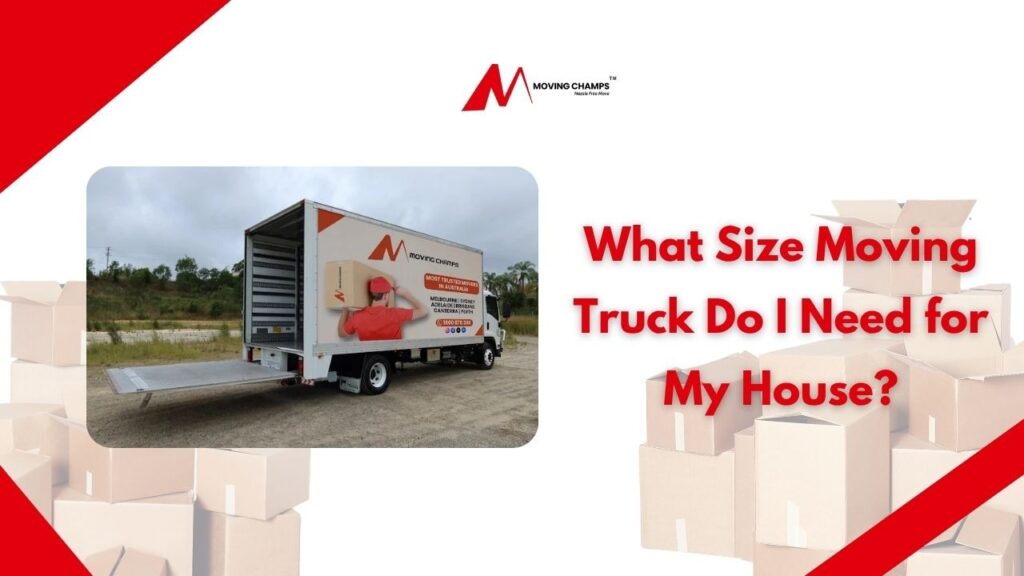

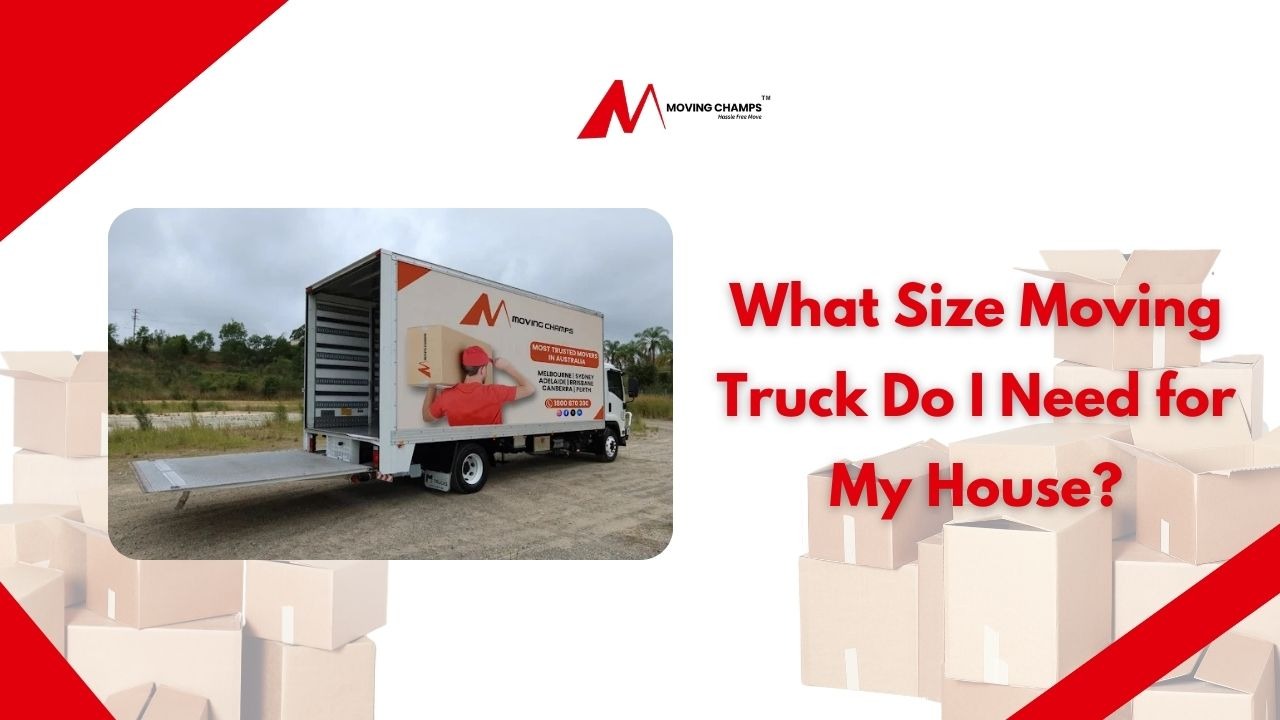
What Size Moving Truck Do I Need for My House?
A rough starting point is 10–12 cubic metres of truck space per bedroom, but the actual space you need depends on how much furniture and belongings you have. As a general guide, a one-bedroom unit may fit a 3-tonne truck (18–20 m³), a two-bedroom home may need a 4-tonne truck (25–30 m³), a three-bedroom house may suit a 6-tonne truck (35–40 m³), and a four-bedroom home may require an 8-tonne truck (45–50 m³). Larger five-bedroom homes or heavily furnished properties may need a 10-tonne truck.
Bedroom count is only a starting point. A three-bedroom house with a packed garage, shed or storage area can require just as much space as a four-bedroom home.
Choosing the wrong size is one of the few moving mistakes you can’t fix on the day. Too small, and you’re paying for a second trip while the clock runs. Too big, and you’ve paid for space, or worse, booked a truck that can’t physically get down your street.
This guide walks through the moving truck sizes used in Australia, what each one actually holds, what they cost per hour, and how to work out which one your house needs. Written for Australian conditions, cubic metres, tonnage ratings, and the licence rules that catch out DIY movers.
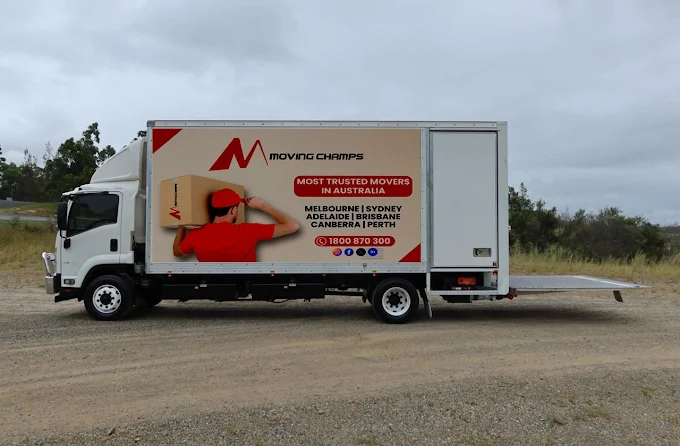
Moving Truck Sizes in Australia: The Full Comparison
Australian removalists size trucks by tonnage, which is slightly misleading. The rating refers loosely to payload capacity, but household goods are bulky rather than heavy — you’ll run out of space long before you run out of weight. Cubic metres is the number that matters when you’re comparing house moving truck options.
| Truck size | Capacity | Suits | Moving Champs Rate |
|---|---|---|---|
| 3 tonne | 18–20 m³ | Up to 1 bedroom | $130/hr — best for small moves |
| 4 tonne | 25–30 m³ | Up to 2 bedrooms | $140/hr — great for medium moves |
| 6 tonne | 35–40 m³ | Up to 3 bedrooms | $160/hr — ideal for family moves |
| 8 tonne | 45–50 m³ | Up to 4 bedrooms | $180/hr — perfect for large moves |
| 10 tonne | 55–60 m³ | 5 bedrooms / large moves | $199/hr — extra large moves |
Every rate above includes two movers, the truck, fuel, and moving equipment, trolleys, straps, blankets, and protective wrapping.
Note what the table assumes: a normally furnished home. It does not assume a double garage stacked to the roller door, a shed full of tools, or a decade of “we’ll sort that later” boxes. That’s where most people get caught, and we’ll come back to it.
What Is The Average Moving Truck Size?
For many Australian house moves, a 6-tonne truck can be a practical choice, offering around 35–40 m³ of space. However, the right truck size depends on the number of bedrooms, furniture, boxes and other belongings you need to move. That’s not an accident — it maps to the three-bedroom house, which is the most common home size being moved in Australia, and it’s the largest truck that still handles most suburban streets comfortably.
It’s also the tier most families land on. Big enough for a full three-bedroom home in one trip, small enough to park on a standard residential street without a traffic-management headache.
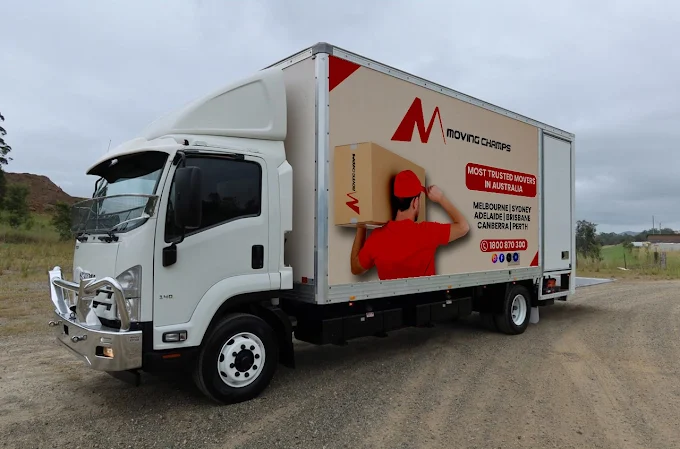
If you’re trying to picture it: a 6-tonne pantech holds roughly the contents of a standard three-bedroom home, three bedroom suites, a lounge setting, dining table and chairs, fridge, washer, dryer, and 60 to 80 boxes. Add a full garage, and you’re into 8-tonne territory.
How Much Is a Moving Truck?
Two very different answers, depending on whether you rent a moving truck and drive it yourself, or book removalist truck hire with a crew.
- With a removalist (truck + 2 movers): $130–$199 per hour depending on size, as per the table above. Fuel and equipment included. For a typical three-bedroom local move taking 4–6 hours at $160/hr, that’s roughly $640–$960 all in.
- Self-drive truck rental: expect somewhere around $80–$150 per day for a small van, and $150–$250 per day for a larger truck, from operators like Budget Trucks or Kennards. But the sticker price isn’t the real price. Add fuel (a loaded truck drinks it), tolls, the insurance excess reduction, any kilometre charges beyond the included allowance, and a one-way drop-off fee if you’re not returning to the same depot.
Then add the part that doesn’t show up on any invoice: you and your friends do all the lifting, for the whole day, and if something gets damaged there’s no professional insurance behind it.
The honest comparison. For a studio or one-bedroom over a short distance, self-hire usually wins on cost. For a three-bedroom house, the gap narrows sharply once you count fuel, extra hire hours, and the second trip you didn’t plan for. For anything interstate, a professional removalist is almost always the better call; the one-way rental fees alone tend to close the gap.
The Two-Minute Method To Size Your Own Move
Bedroom counts are a shortcut. If you want a number you can confidently book against, do this instead.
- Step 1: Count the big items. Every fridge, washing machine, dryer, lounge suite, dining table, bed, wardrobe, bookshelf, desk and TV unit. These eat volume fast. Working figures: a standard fridge is about 1 m³, a three-seater lounge about 2 m³, a queen bed with base and mattress about 2 m³, a four-door wardrobe about 2.5 m³.
- Step 2: Count your boxes. A standard tea-chest box is roughly 0.11 m³, so twenty of them is a bit over 2 m³. Most three-bedroom homes produce between 60 and 100 boxes, considerably more than people guess before they start packing.
- Step 3: Add the forgotten zones. Garage, shed, under the house, the balcony, the linen cupboard, the roof cavity. This is the single biggest source of underestimation.
- Step 4: Add 15% breathing room. Furniture can’t be stacked like Tetris blocks. You lose space to protective wrapping, to awkward shapes, and to the simple fact that a mattress can’t have a bookshelf balanced on top of it. Anyone promising to fill 100% of a truck is being optimistic.
Add it up, then pick the truck that comfortably exceeds your total — not the one that just barely matches it.
Also Read: Removalists Melbourne: How to Choose the Right Company for Your Move (2026 Guide)
The Licence Limit That Catches Out DIY Movers
If you’re planning to rent a moving truck and drive it yourself, this is the most important section here.
In Australia, a standard car licence (class C) permits vehicles up to 4.5 tonnes GVM — Gross Vehicle Mass, meaning the truck’s weight plus everything loaded in it. Above that, you need a Light Rigid (LR) or Medium Rigid (MR) licence.
This is precisely why hire companies cap most of their self-drive range at 4.5t GVM. It’s not a coincidence; it’s the legal ceiling for the average customer. In practical terms, the biggest truck you can legally drive on a car licence holds around 20–25 m³, fine for a one- or two-bedroom unit, and not enough for a family home.
So if you’re moving a three or four-bedroom house yourself, your real options are multiple trips in a smaller truck, or hiring a driver. Do the arithmetic honestly before committing. Two return trips across Sydney on a Saturday, fuel, tolls, extra hire hours, and a full day of your own labour, is rarely the bargain the booking page suggests.
Licensing is set by each state’s transport authority (Transport for NSW, VicRoads, Queensland’s TMR and so on) and the 4.5t threshold is broadly consistent nationally, but check your own state if you’re unsure.
Access Matters As Much As Size
A truck that fits your furniture but not your street is a problem you’ll discover at the worst possible moment. Check three things before you book any house moving truck:
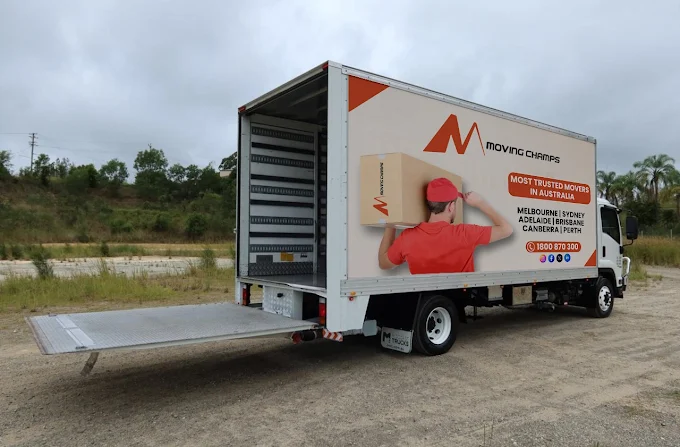
- Height clearance. A pantech-body truck typically stands 3.4–3.8 metres tall. Most apartment basement car parks are signed at 2.1–2.3 metres. A moving truck is not going down there, which means the crew carries everything from street level, and that changes both the time and the cost. If you’re in an apartment, find the loading bay and find out whether it needs booking.
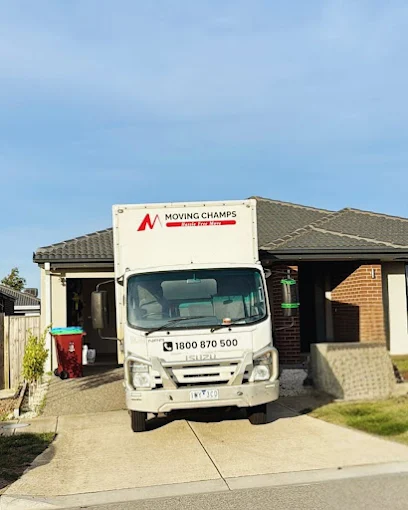
- Street width and parking. Narrow terraces in Sydney’s Newtown, tight lanes in Melbourne’s Fitzroy, steep driveways, low-hanging branches and cul-de-sacs all rule out the largest trucks. Some councils also require a permit or a bay booking for a removal truck, worth a phone call a week out, not the morning of.
- Lift bookings and strata rules. Plenty of apartment buildings restrict move-in times, require a booked lift, and won’t allow moves on Sundays at all. Buildings with a strata manager often want notice and sometimes a bond. None of this changes your truck size, but all of it determines whether the move happens on the day you booked.
When Two Smaller Trucks Beat One Large One
Counterintuitive, but it comes up often. Two 4-tonne trucks running at once can finish a three-bedroom move faster than a single 6-tonne, because you’ve got two crews loading in parallel instead of one crew queuing at a single tailgate. It also solves tight access, and nothing waits for a truck to be full before it departs.
The trade-off is cost: two trucks means two crews, so at $140/hr each you’re at $280/hr against $160/hr for the single 6-tonne. Whether that’s worth it depends on distance, access, and how tight your settlement or lease-handover timing is.
The Mistakes That Cost People Money
- Sizing off bedrooms alone. A minimally furnished four-bedroom rental can need less space than a two-bedroom house owned by someone who’s lived there twenty years. Volume, not bedrooms.
- Forgetting the garage. The number one under-quote trigger. Bikes, tools, camping gear, sporting equipment, paint tins, the spare fridge — that’s easily 8–10 m³, an entire small truck’s worth.
- Not decluttering first. Every cubic metre you move is a cubic metre you pay for. Selling, donating or tipping beforehand is the cheapest way to drop a truck size, and dropping from an 8-tonne to a 6-tonne saves $20 an hour for the whole job.
- Assuming the quote covers the real volume. If someone quotes over the phone without asking about your garage, appliances or access, that’s a guess, not a quote. Our guide on spotting a dodgy removalist quote covers what a legitimate one includes.
- Booking too tight on interstate moves. Sydney to Perth move is not a job where a second trip is an option. For interstate, always size up.
So What Should You Actually Book?
- Studio or one-bedroom unit — a 3-tonne truck at $130/hr covers it, and it’s within what you can legally drive yourself if you’d rather.
- Two-bedroom — book the 4-tonne at $140/hr. This is the size most commonly underestimated, because two-bedroom homes often hold a second bedroom’s worth of storage.
- Three-bedroom house — the 6-tonne at $160/hr suits most. Step up to the 8-tonne if you’ve got a full garage, a shed, or substantial outdoor furniture.
- Four-bedroom — 8-tonne at $180/hr, minimum. At this size, a wrong guess costs a full extra day.
- Five bedrooms or a large family home — the 10-tonne at $199/hr. The $19/hr difference over an 8-tonne is trivial next to the cost of running out of space.
And if you’re genuinely torn between two sizes: take the bigger one. On these rates, sizing up costs $10–$20 an hour. A second trip costs hours, fuel, and a much longer day.
Final Takeaway
Truck size comes down to volume, not bedrooms. Count your furniture, count your boxes, walk through the garage and the shed honestly, add 15% for wrapping and awkward shapes, then book the size that comfortably covers it.
For most Australian homes, that lands on a 6-tonne, which is why it’s the most-booked truck in the country. But the three-bedroom house with a full garage and the four-bedroom with barely any storage both break that rule, and it’s worth ten minutes with a tape measure to know which one you are.
The one thing worth repeating: when you’re stuck between two sizes, take the bigger one. Sizing up costs $10–$20 an hour. Running out of space costs you a second trip, an extra crew, and a day that stretches into the evening, usually on the same day you’re handing back keys or settling on a property.
Not sure which size fits your home? Our team sizes moves across Sydney, Melbourne, Brisbane, Perth, Adelaide, Canberra, Hobart and Darwin every day, and we’ll tell you straight if you need a smaller truck than you think. Get a free quote — a two-minute conversation about your garage now saves a very long afternoon later. Contact Moving Champs Today!
Frequently Asked Questions
Q1. What size truck do I need for a 3-bedroom house in Australia?
Ans: A 6-tonne truck (35–40 m³) suits most three-bedroom homes and costs around $160/hr including two movers and fuel. Move up to an 8-tonne if you have a full garage, shed, or substantial outdoor furniture.
Q2. What is the average moving truck size?
Ans: The 6-tonne, at 35–40 m³. It matches the three-bedroom home — Australia’s most commonly moved house size — and still fits comfortably on standard suburban streets.
Q3. How much is a moving truck per hour?
Ans: With a removalist, $130/hr for a 3-tonne up to $199/hr for a 10-tonne, including two movers, fuel and equipment. Self-drive truck rental runs roughly $80–$250 per day before fuel, tolls and insurance.
Q4. Can I drive a moving truck on a normal car licence in Australia?
Ans: Yes, up to 4.5 tonnes GVM — the truck plus its load. That’s roughly a 20–25 m³ truck, enough for a one or two-bedroom home. Anything larger requires an LR or MR licence.
Q5. Is it cheaper to hire a truck myself or use a removalist?
Ans: For a small unit over a short distance, self-hire usually wins. For a three-bedroom house or any interstate move, removalist truck hire is often comparable once you add fuel, tolls, extra hire hours and insurance excess — and you’re not doing the lifting.
Q6. How many cubic metres is a 3-bedroom house?
Ans: Typically 35–45 m³ including furniture, appliances and boxes. A garage or shed adds another 8–10 m³ on top.
Q7. What happens if the truck is too small on moving day?
Ans: You make a second trip or leave items behind. Both cost money and hours — and if you’re settling on a property or handing back keys, neither is a position you want to be in.
Q8. How many boxes fit in a 4-tonne truck?
Ans: Around 25–30 m³ of space, so roughly 200 standard tea-chest boxes if you loaded nothing else. In a real move with furniture, expect 60–80 boxes alongside everything else.

Popular Posts
- The Complete End of Lease Cleaning Checklist for Australian Renters in 2026-2027

- Backloading vs Dedicated Moving Truck: Which Is Cheaper?
- What Size Moving Truck Do I Need for My House?
- Darwin to Brisbane Move: Costs, Suburbs, Jobs & Everything You Need to Know

- Cost of Living in Australia: A Complete 2026 Breakdown

Popular Categories
Our Services


Request A Free Quote