
Moving Boxes: Types, Sizes and How to Pack Like a Pro
Moving to your new location is always the start of a new journey — but getting there can be challenging. One of the most important parts of any relocation is packing. Having your things safely packed, arranged, and protected not only secures your belongings but also makes the whole moving process easier, faster, and less stressful than it already is.
Whether you’re relocating across Sydney, Melbourne, Brisbane, or anywhere else in Australia, preparation is key. Selecting the best moving boxes and smart packing can save you from added stress when it’s time to unpack on move-in day.
In this guide, we’re going to take you through everything you need to know about moving boxes, with tips that will help ensure your move is as smooth and stress-free as possible.
Why is Using the Right Moving Boxes Important?
Packing isn’t simply about putting things into any box you can find. The importance of proper moving boxes can’t be overstated: packing is only as fast and efficient as the boxes you’re using, and picking cardboard boxes at random can spell disaster for your house move.
Good-quality boxes are essential for preventing damage to fragile and valuable items, ensuring that your space remains uncluttered during moving, and making the process of loading, transporting, and unloading much less painful. Here’s why making that investment in the right moving boxes really makes a difference:
- Protect Breakable Items: boxes serve as an essential barrier against damage for anything that could be easily damaged, like glassware, electronics, artwork, and delicate ornaments.
- Stay Organised: The right sizes are marked for easier identification, and they unpack faster when you get to your destination.
- Safely Manage Weight: The right box selection limits potential overload, reducing the risk of damage and making handling safe for all recipients.
- Reduce Your Moving Costs: These boxes are designed to prevent wasted space in your truck, so you move faster and spend less.
In Australia, professional house movers always recommend using quality boxes and labelling them correctly. Whether you are moving with boxes or planning an office, careful planning is key.
Types Of Moving Boxes
Knowing the types of moving boxes can help you pack more efficiently and protect your belongings during a move. Let’s break them down below:
Small Boxes
- Works For: Books, files, DVDs, kitchenware, and heavy items that fit in a small box
- Average Size: 40 x 30 x 30 cm
- Tip: Do not pack small boxes too heavily — Keep them light enough to carry
Medium Boxes
- Great For: Clothes, toys, small electronics, and pantry items
- Average Size: 60 x 40 x 40 cm
- Tips: Stuff towels or clothes in gaps to prevent shifting
Large Boxes
- Ideal For: Bedding, cushions, and light, bulky items
- Average Size: 80 x 50 x 50 cm
- Tips: Use only lightweight items to avoid collapsing
Speciality Boxes
- Dish Packs: For fragile kitchenware, often with cell dividers.
- Wardrobe Boxes: Tall boxes with a hanging bar for clothes.
- TV Moving Box: Protects televisions during transport.
- Mirror & Picture Boxes: Reinforced corners prevent damage.
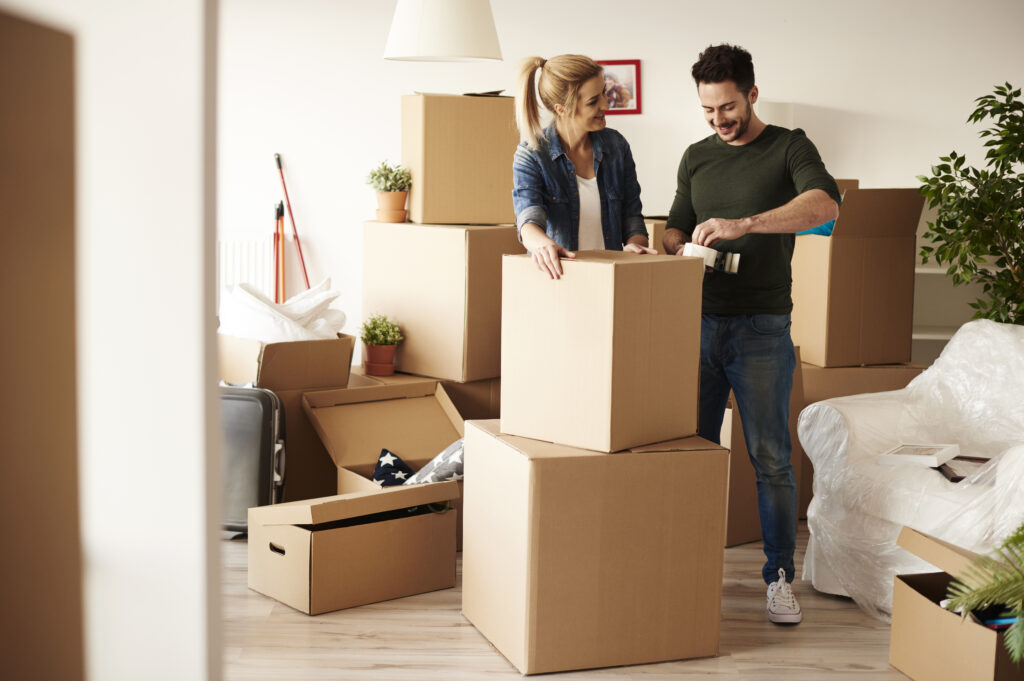
How to Pack Moving Boxes Like a Pro
The way you pack your moving boxes can have a significant impact on your move. When everything is safely and rationally packed, unpacking is faster and more peaceful. The entire move becomes far less stressful. Here are some simple yet professional packing tips to help you move like a pro.
1. Acquire the Right Packing Materials
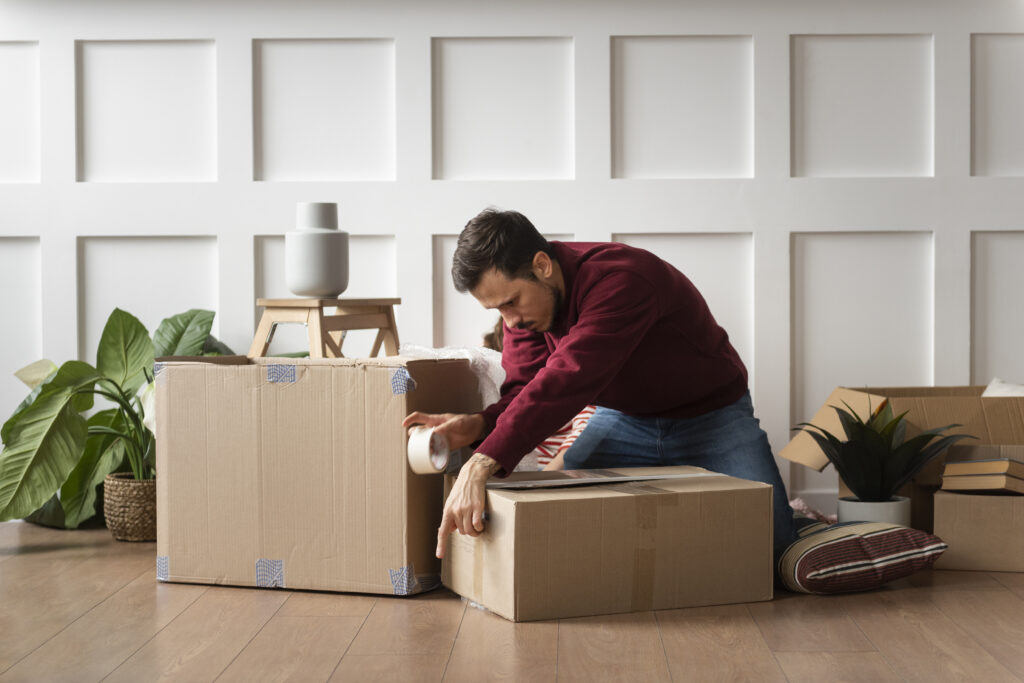
Before you begin, make sure you have all the necessary equipment. Using high-quality and durable moving boxes will prevent breakage. Store bubble wrap or packing paper for fragile items in the box as you pack, some sturdy packing tape to close them up properly, and a permanent marker so it is easy to read what’s inside each box.
2. Place Heavy Items at the Bottom of Boxes
Heavier items should always be placed at the bottom of a box, with lighter items on top. This helps keep boxes balanced and prevents delicate items from being crushed during transport.
3. Handle Fragile Items with Care
A bit of extra care is needed for the fragile ones. Wrap your glassware, crockery, and décor pieces in bubble wrap, packing paper, or even soft towels, which also help to cushion them from impact should there be any sudden movements. Be sure there are no empty spaces inside the box by filling them with padding so that nothing moves around.
4. Avoid Overfilling boxes
It can be tempting to fit as much as possible into one box, but overfilled boxes are difficult to lift and more likely to break. Stick to safe weight limits so boxes stay secure and easy to carry.
5. Label Each Box Clearly
Clear labelling will save time and confusion. Write down what’s in that box and which room it belongs in. For example, “Kitchen—Glassware—Fragile” makes it easier for your movers to handle the box carefully and place it in its correct room.
6. Use the Proper Box for Each Item
Selecting the right size of box helps in protecting your goods:
- Small Boxes: Books, DVDs, and other weighty items
- Medium-Sized Boxes: Clothing and smaller furniture, such as toys and household items
- Big Boxes: Bedding, pillows, or weightless items
- TV Boxes: Televisions and screens

Common Mistakes To Avoid When Moving In Boxes
Even experienced movers can make mistakes. Avoid these pitfalls:
- Overloading boxes—risk of injury or collapse
- Using weak boxes for fragile items
- Not labelling boxes properly
- Not protecting the corners or edges of fragile items
- Packing items that shift during transit
Read More: Moving House Checklist: A Stress-Free Guide (Australia)
Where to Buy Moving Boxes in Australia?
With a number of convenient options available, it’s easy to find the best moving boxes in Australia.
- Retail stores like Officeworks are perfect for packing files, documents, and office materials, while Bunnings Warehouse offers affordable cardboard boxes suitable for general household moves.
- In Australia, many online platforms, such as Amazon Australia and eBay, now have lots of moving boxes delivered right to your door. You can also consider small moves that provide professional-grade, fragile item boxes, including TVs and large products.
- A little way to be environmentally responsible: a lot of supermarkets and liquor shops give away clean, used boxes for free. This practice helps to reduce the volume of commercial waste. Boxes can also be recycled, or if they are too old to be used again, they can be broken into individual sheets for re-pulping.
- Another good choice is to use a professional moving company. Moving Champs offers high-quality moving boxes, robust packing materials, and specialist advice, along with a custom packing service for all types of short- and long-distance moves. By employing expert movers, you can rest assured that proper care will be taken when it comes to handling delicate items.
Eco-Friendly Packing Tips
A growing number of Australians are trying to make their moves eco-friendly. Despite what you might assume, moving doesn’t have to be a wasteful process—with critical planning and sustainable materials, it’s possible to make the entire experience more Earth-friendly. Here’s how:
- Find strong boxes from the supermarkets, friends, or even your previous moves.
- If you still have any additional boxes, just recycle them instead of throwing them out.
- Don’t pack too many boxes or buy too many for your move. With some careful planning, you can reduce the amount of waste and keep your move in order.
- If you’re buying new, search for boxes made out of recycled cardboard or biodegradable packaging materials. These little choices add up in a big way for the environment.
You can make your move safer for the items you’re transporting by following these simple tips. Responsible packing doesn’t have to mean sacrificing safety or functionality—it’s all in the choices we make
Read More: How to Book a Removalist in Melbourne
Conclusion
Packaging plays an important role in how stress-free and smooth a house move feels. When your materials are packed carefully, organised, and prepared ahead of time, then the entire relocation becomes easier to manage. Simple steps like planning your packaging, using strong boxes, and clearly labelling them can protect your belongings and save your valuable time during the House move. Good Packaging isn’t about doing more – it’s about doing things in a smart way.
At Moving Champs, professional movers understand the value of every item—whether it’s fragile household goods or heavy equipment. With the right tools, experience, and attention to detail, they ensure your belongings are packed, handled, and transported safely. Whether you’re moving locally or planning a long-distance relocation, MovingChamps supports you from start to finish, giving you peace of mind every step of the way.
Frequently Asked Questions
Q1: Where can I find moving boxes?
Ans: Moving Boxes can be found at hardware stores, markets, online, or through professional moving services.
Q2: What size moving boxes are best for packing?
Ans: Small boxes are best for heavy items like books, medium boxes for everyday items, and large boxes for lightweight and heavy items.
Q3: Are free-moving boxes safe to use?
Ans: Free boxes can be safe if they are dry and clean. Avoid using damaged boxes for heavy items.
Q4: How do I pack fragile items safely?
Ans: Wrap each of the items separately, use padding to fill the empty spaces and clearly label the box as fragile.
Q5: How early should I start packing before moving day?
Ans: It’s best to pack non-essential items at least two or three weeks before your house move to avoid last-minute stress.
Q6: Can moving boxes be reused after the house move?
Ans: Yes, definitely; most of the boxes can be used for future house moves.


Popular Posts




Popular Categories
Our Services

Request A Free Quote